Answer Capsule
Google just released Gemini 3.1 Pro, one of the most capable AI models available right now, and you can use it for free inside Antigravity (a free AI coding tool). In just 2 prompts, you can build a complete, SEO-ready directory or business website using the Astro framework, then host it on Cloudflare for free. The only thing you pay for: your domain name.
Why Does a Free AI Model Change Everything for Website Builders?
Because "I can't afford good AI tools" is no longer an excuse.
Until now, the best AI coding models sat behind expensive API subscriptions or Pro plans. You either paid up or settled for weaker models. That's changed.
Google's Gemini 3.1 Pro is available for free inside Antigravity, a free AI coding tool you just download and connect to your Google account. No subscriptions. No API costs. No credit card. Just access to one of the most powerful AI models on the market right now.
For anyone building SEO-optimised websites, local business pages, or niche directories, this changes the maths completely.
And before you think this is just a toy: I built a complete fly fishing lodge directory site for Patagonia in 2 prompts. With navigation. With SEO metadata. With individual lodge pages. In roughly 5 minutes of actual generation time.
Let me walk you through exactly how it works.
What Is Antigravity and How Do You Get It?
Antigravity is a free AI coding environment where you can run powerful AI models to build websites and applications.
To get started:
- Download Antigravity for free
- Connect it to your Google account
- Select Gemini 3.1 Pro High as your model
- Start building
That's it. You now have access to Gemini 3.1 Pro. The same model that would otherwise require API credits or a paid plan.
There are token limits (as with any free tier), but for starting a project from scratch, getting a working prototype, or building out a client site, the free allowance is more than enough to get serious work done.
What Is the Astro Framework and Why Should You Use It?
Astro is a modern web framework built for performance and SEO.
I've been using it a lot lately, and for good reason. If you've been building on WordPress or Webflow and want more control and better performance, Astro is the upgrade you're looking for.
Here's why it works so well for SEO:
- Static output by default: Pages render as plain HTML, which loads fast and indexes easily
- No client-side JavaScript overhead: AI search engines and Google crawlers love clean, fast pages
- Structured output: Built-in support for clean heading hierarchies, meta tags, and schema
- Deploys anywhere for free: Cloudflare Pages, Netlify, and Vercel all have generous free tiers
We've already covered how to build a 99% SEO website in 12 minutes using Claude Code and Astro. The approach with Gemini 3.1 Pro inside Antigravity follows the same philosophy: let AI do the heavy lifting, but build on a framework that handles SEO fundamentals out of the box.
What Does the Full Free Stack Look Like?
Here's the complete tech stack with zero ongoing costs:
- Antigravity (free download) - Your AI coding environment
- Gemini 3.1 Pro (free via Antigravity + Google account) - The AI model doing the building
- Astro (free, open source) - The web framework
- Cloudflare Pages (free hosting) - Where your site lives
Total cost: $0/month. You only pay for a domain name (usually around $10-15/year).
That's a production-ready, SEO-optimised website for the price of a domain. If you're building sites for clients, the margin on that is pretty interesting.
How Did 2 Prompts Build an Entire Website?
Let me show you exactly what happened in the demo.
Prompt 1: Build the Directory
The first prompt was simple:
"Build a fly fishing lodge directory for the south of Chile in Patagonia using the Astro framework. Make it look clean and professional."
What Gemini 3.1 Pro generated in about 2 minutes:
- A homepage with a search bar and filters
- Feature listings for 6 lodges with different card designs
- Animated icons (it found these somehow)
- Working navigation
- An "explore directory" page
- SEO title tags (Patagonia Fly Fishing Directory) auto-generated
- Heading structure set up correctly
Was it perfect? No. The images were missing (Gemini 3.1 Pro can't generate images, which is expected). The filters weren't functional yet. Individual lodge pages weren't built yet.
But for one prompt, this was not bad at all.
Prompt 2: Complete the Lodge Pages and Add Interactivity
The second prompt:
"Complete the individual lodge pages so we can see them. On the homepage, add more interactive elements. Be creative."
What came back in about 3 minutes:
- Individual lodge pages with gallery sections, guide profiles, and booking info
- A review section added to lodge pages
- An FAQ section
- Subtle animations on the homepage
- An almost Apple Liquid Glass-style visual element on the experience section
Again, not client-ready straight out of the box. But as a foundation to build from? Absolutely solid.
How Do You Make the Design Look Good?
Here's a practical tip for anyone doing vibe coding (building with AI): give the AI examples to work from.
There's a free template library called 21st.dev that has a huge collection of animated buttons, cards, hover effects, and UI components. You can browse the library, find the component you want, copy the prompt for it, and say:
"Use this template for this section."
The AI will implement the component with the animation intact. The free version of 21st.dev gives you access to a lot of quality components, and it's the kind of shortcut that makes an AI-built site look significantly more polished without any extra design skill required.
Does an AI-Built Astro Site Have Good SEO?
Yes, with a bit of guidance, and here's where the Astro framework earns its reputation.
In the demo, after the second prompt, the site automatically had:
- A proper title tag (Patagonia Fly Fishing Directory)
- A reasonable heading hierarchy
- Clean page structure
What it was missing: schema markup and a few more H2 headings on individual pages.
Both are easy fixes with one more prompt. Just tell the model:
"Add FAQ schema markup to the lodge pages and homepage. Add more H2 headings to break up the lodge page content."
This matters because, as we've covered in the AI Ranking community, schema markup gives you a 3.2x higher probability of appearing in AI-generated answers. And pages with proper heading structure get cited more often in AI Overviews and ChatGPT responses.
The Astro framework handles the technical foundation. You prompt the model to add the semantic layer on top.
Can You Host This for Free?
Yes. Cloudflare Pages is the recommended option.
Cloudflare has a free tier that handles static Astro sites without limits on bandwidth. The process is:
- Push your Astro project to a GitHub repository
- Connect the repository to Cloudflare Pages
- Set your build command (npm run build) and output directory (dist)
- Deploy
Your site goes live on a Cloudflare subdomain (free), and you can point a custom domain at it for the standard domain cost.
The speed benefits are significant too. Cloudflare's global CDN means your pages load fast from anywhere in the world, which matters for both user experience and AI search engine citations (slow sites get skipped).
How Does This Compare to Building with Claude?
Honestly? Both are strong, but they have different personalities.
Anthropic's Claude (especially Claude Opus 4.6) tends to be more creative and produces more aesthetically interesting outputs. Google's Gemini 3.1 Pro is fast and capable but leans slightly more conservative and structured in its design choices.
For pure website building speed and the fact that it's completely free, Gemini 3.1 Pro inside Antigravity is hard to beat right now. For more creative or nuanced projects, Claude is still my go-to.
The real win here isn't "which model is better." It's that you now have access to multiple world-class models for free. Use whichever fits the project.
Real Results: What Happens When You Build Sites That Rank
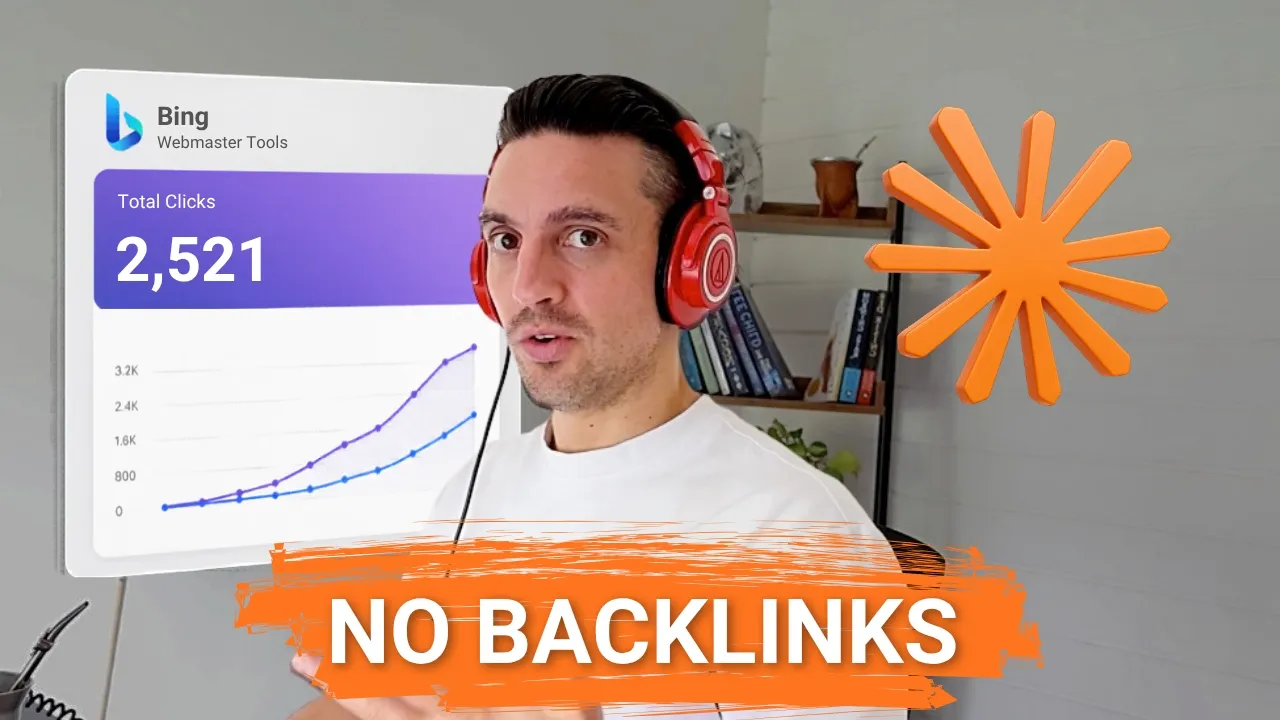
One of our community members, Steven, built 800+ location pages for a client using proper on-site SEO fundamentals and a similar systematic approach to page generation. The result: 105 online appointments in a single month, with pages indexing in Google within an hour of submission.
That's the kind of outcome you get when the technical foundation is right. Astro gives you that foundation. Gemini 3.1 Pro inside Antigravity gives you the speed to build it.
The AI Ranking community has members building directory sites, local business pages, and niche content hubs using exactly this approach. The ones who focus on getting the fundamentals right alongside AI-assisted building are seeing real results.
Frequently Asked Questions
Is Gemini 3.1 Pro actually free inside Antigravity?
Yes. Download Antigravity for free, connect your Google account, and select Gemini 3.1 Pro High. There are token limits on the free tier, but for starting and building out projects, the free allowance is substantial.
Do I need coding experience to use Antigravity and Astro?
No. The whole point of AI coding tools like Antigravity is to let you build in plain English prompts. You describe what you want, the AI writes the code. Astro is the framework running underneath, but you don't need to touch the code directly to get a working site.
Is the Astro framework good for SEO?
Yes. Astro builds static HTML by default, which means fast load times and clean pages that search engines (and AI search engines) can easily crawl and index. It also supports schema markup, meta tags, and structured data out of the box.
How do I add schema markup to an Astro site built with Gemini?
Just prompt it. Tell Gemini 3.1 Pro: "Add FAQ schema markup to the homepage and individual pages. Add LocalBusiness schema to the lodge pages." The model will generate the structured data and inject it into the appropriate page components.
Can I use this for client work?
Absolutely. The free stack (Antigravity + Gemini 3.1 Pro + Astro + Cloudflare) can produce production-quality websites. Add your own domain, customise the design with prompts, and you have a site you can hand to a client. The margins on this kind of project are excellent.
What's Coming Next
I'm planning a full walkthrough video: building a complete, SEO-optimised website from scratch using Gemini 3.1 Pro, Astro, and Cloudflare, all for free. If you want to see that, let me know in the comments on the YouTube video.
For now, the best next step is to download Antigravity, connect your Google account, and run your first prompt. The barrier to building an AI-powered website just dropped to zero.
If you want to go deeper on optimising what you build for AI search, including how to make sure ChatGPT and Google AI Overviews actually cite your pages, that's exactly what we cover inside the AI Ranking community.
Join 477+ SEO practitioners building for the AI search era: AI Ranking Community
Resources